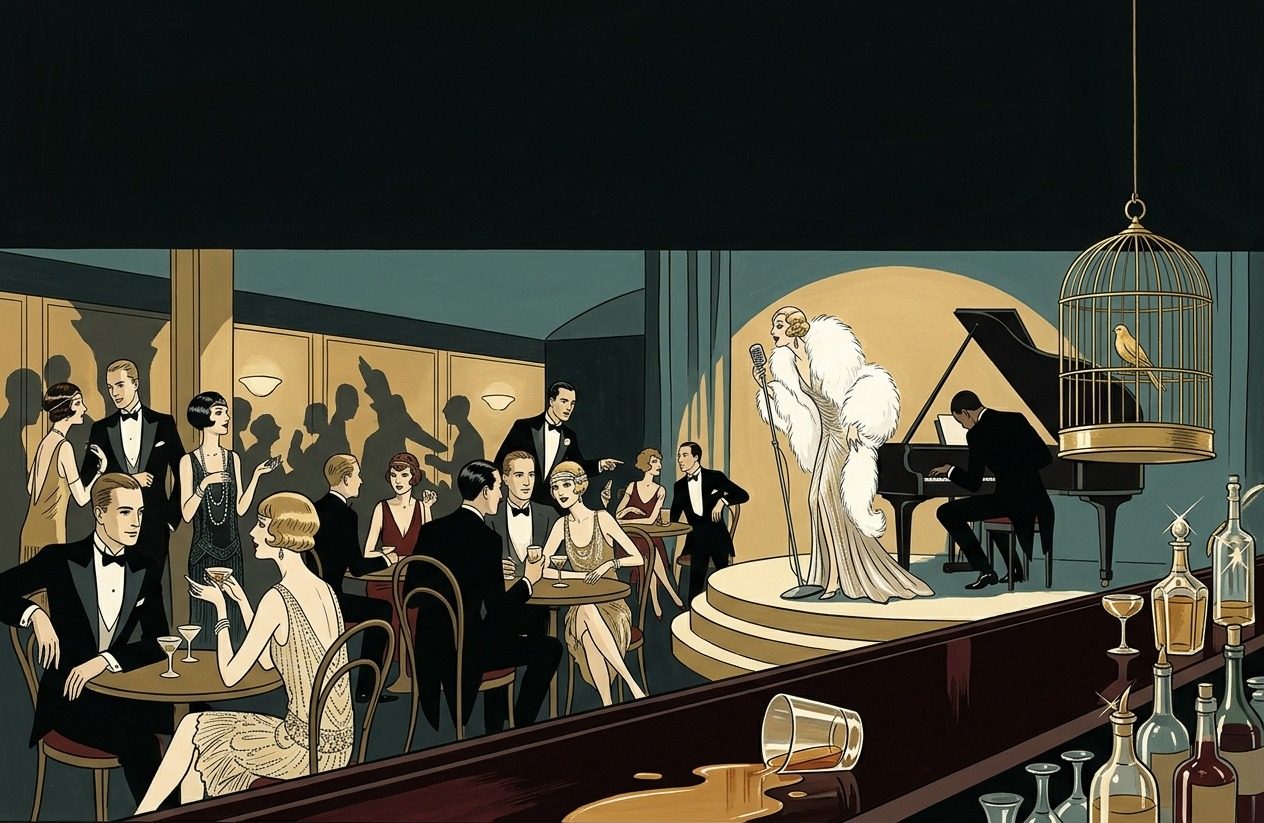
A murder mystery party is a dinner or cocktail party with a script. Every guest plays a character, a "murder" happens partway through, clues come out over the evening, and at the end everyone votes on who did it. You don't need actors, a big house or a costume budget. You need a game that fits your guest count, a few weeks' notice, and a host who is happy to keep an eye on the clock.
Three to four weeks before: pick the game and the guest list
Start with your headcount, not the theme. A game written for exactly ten players falls apart when two people cancel, because their characters were carrying clues. Look for a game that names a range (8 to 20, say) and explains what happens when you have fewer guests. Ours put every clue the solution needs on the first eight characters, so you print characters 1 to however many guests you end up with.
Then pick a theme your friends will dress up for. A 1920s speakeasy is the most popular for a reason: everyone already owns something that passes, and "flapper dress or pinstripe suit" is an easy brief.
Think about the mix of people too. Give the biggest, loudest parts to the guests who'll enjoy them. Quieter guests are often happiest with a smaller role that has a clear job (a side goal, a bit of gossip to sell) rather than a big secret to defend.
Two to three weeks before: send the invitations
Send each guest their character, a one-line description and a costume idea. People who know who they are in advance arrive in costume and in the mood, and they'll have thought about their character on the way over. Ask for an RSVP by a week before the party so you know how many characters to print.
Don't send full character cards ahead. The fun is reading them on the night, and anyone who forgets theirs at home is stuck.
The week before: print and prepare
- Print early. Printers run out of ink at the worst moment. Print a day or two ahead and check every page.
- Make a packet per guest: their character card, their sealed envelopes and a name tag, together in one pile or folder.
- Sort the evidence into one folder per murder, in order, so you're not hunting for it mid-party.
- Read the host guide twice, once to understand it and once with a pen to mark the times you'll need to step in.
- Cut the play money and cards if your game has them. This takes longer than you expect: it's a good job for a helper with scissors and a film on.
Food and drink
Keep the food easy. A host who is plating a three-course dinner can't also run the timeline, so think finger food, a buffet or a big pot of something. Match it loosely to the theme if you like: deviled eggs, shrimp cocktail and a gin punch suit a 1920s night. Set the bar somewhere central so people mingle around it; it's where half the scheming happens.
Have plenty of non-alcoholic options and label the punch. A murder mystery works best when people are relaxed, not when the detective work is happening through a fog.
Setting the room
You don't need decorations, but a few touches go a long way: dim the main lights and use lamps or candles, play period music quietly in the background (search "1920s jazz" for a speakeasy), and put a sign on the door. If your game mentions places (a cellar, an office, a phone booth), pick a corner or a hallway for each one so guests can slip away for private conversations.
Leave space for people to move. Guests should be standing and mixing for most of the night, so push some furniture back and put out a few chairs around the edges.
On the night
As guests arrive, hand each one their packet and name tag. Give people fifteen minutes to read their card and get a drink before anything happens.
Read the welcome and the rules once most people have arrived. Keep it short. The three things everyone needs to know: what you can share, what you must hide, and when to open your envelopes.
Keep the clock. The host's main job is timing. Set phone alarms for each murder and each envelope round. If a round is buzzing, let it run five minutes over; if the room goes quiet, move on early.
Make the murders an event. Stop the music, gather everyone, and read the murder and the evidence aloud with a bit of drama. Then lay the evidence on a table where people can study it.
Watch for the quiet ones. If someone's standing alone, give them a nudge: "Have you asked Harold about his bank yet?" Action cards help here: anyone can play one to force a secret out or start a rumour.
Keep the dead playing. Being murdered first shouldn't mean sitting out. In our games the dead become ghosts who keep mingling and can share anything on their card, which often makes them the most useful people in the room.
The vote, the reveal and the awards
Give everyone a ballot and ten minutes, and ask for three answers: who did it, how, and why. Scoring each one separately means even half-right guesses earn something, and it settles arguments about who was "closest". Then read the solution aloud, slowly, with the killer standing up.
Finish with awards: best costume, most in character, best detective. They cost nothing and they're what people talk about afterwards.
Mistakes that sink a party
- Too much reading at once. If guests spend the first hour reading a ten-page booklet, the room goes silent. Short cards and envelopes opened over the night keep things moving.
- A case nobody can solve. The most common complaint about bought kits is a solution that comes out of nowhere. Before you buy, check whether the clues point to one answer by the end.
- Missing characters. If a no-show was holding a key clue, the case breaks. Choose a game that handles headcount changes properly.
- A host buried in the kitchen. Keep the food simple or hand it to a helper. The timeline needs you.
- Starting too late. Begin the first round within half an hour of the official start time, or you'll be reading the solution at midnight to a sleepy room.
Quick checklist
- Game chosen for your headcount range
- Invitations sent with characters and costume ideas
- RSVPs in a week before
- Everything printed, packets made, evidence sorted by murder
- Host guide read twice, alarms set
- Simple food, central bar, non-alcoholic options
- Music, low lights, places marked
- Ballots, pens and awards ready